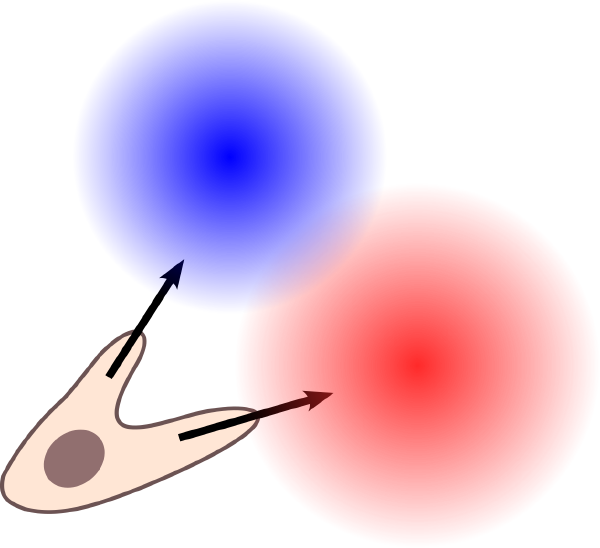
How do cells decide which chemical signal to follow in complex environments? By weighting their movement toward the gradient they can sense most accurately, cells navigate competing cues and find effective paths even when signals conflict or overlap.
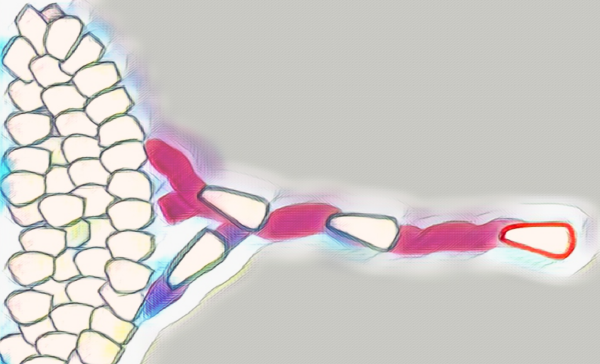
Migrating cells actively remodel their environment by leaving molecular footprints, which shape both individual and collective cell movement through dynamic feedback.
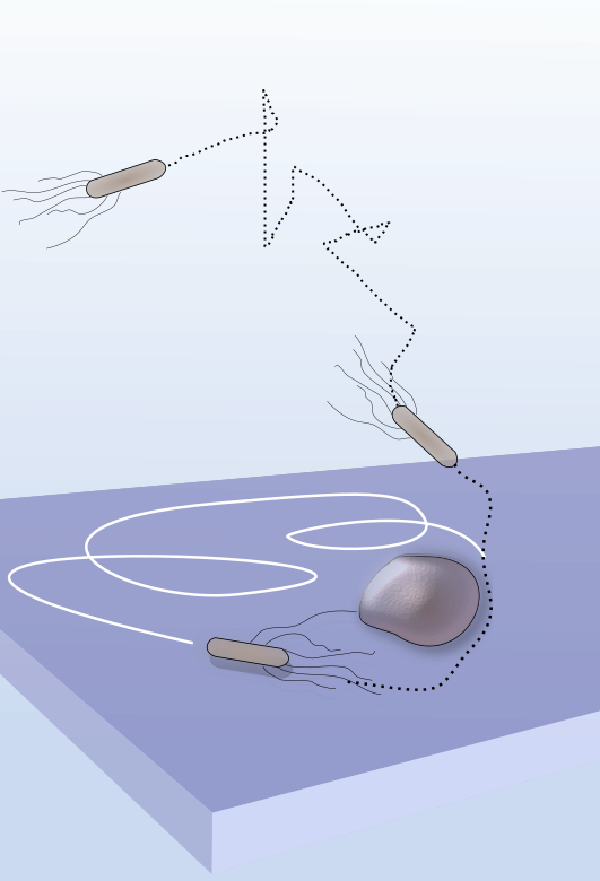
How do bacteria efficiently find host cells near surfaces? By alternating swimming with brief stops and adhesion, they enhance their ability to explore and interact with the environment during infection.
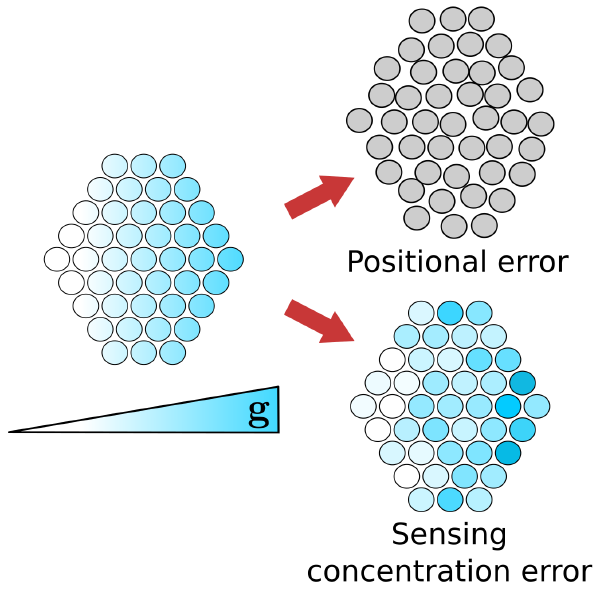
Eukaryotic cells sense noisy chemical signals in their environment to guide their directional movement.
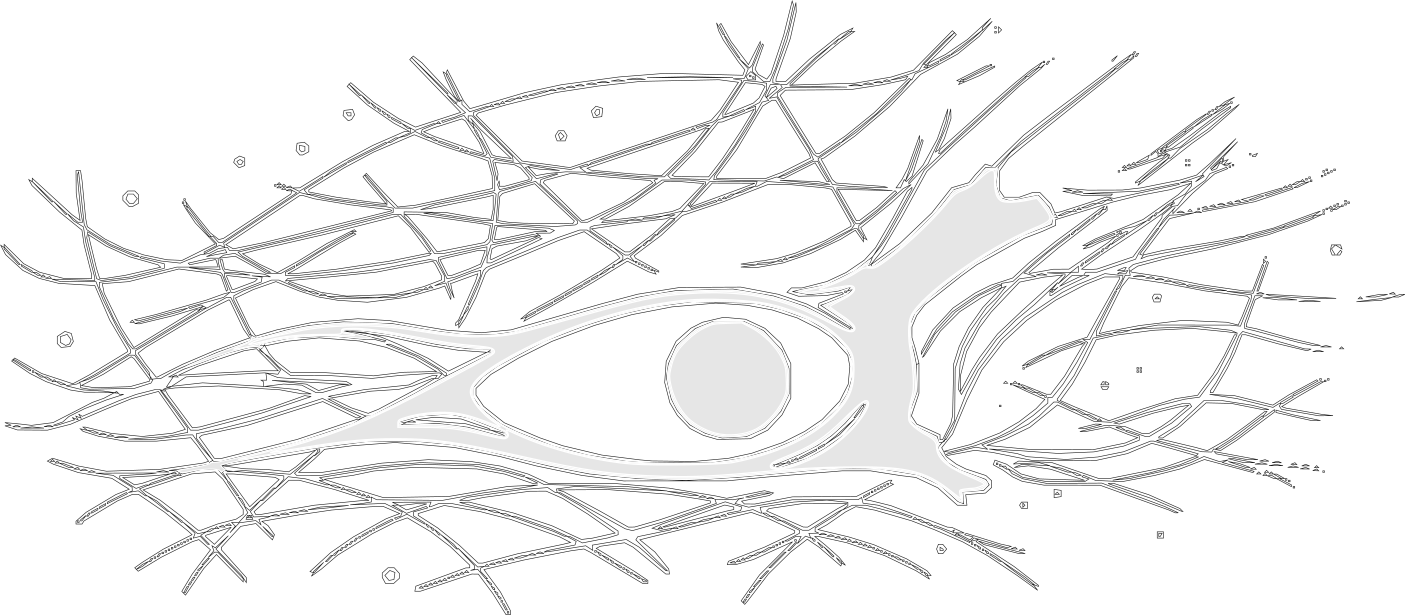
Physical barriers like narrow tissue channels can dramatically alter how cancer cells move and break away, revealing key mechanisms that underlie metastatic spread.